Choosing a notebook comes down to two questions: what will you use it for, and what will you write with? Those answers decide the four things that matter most, which are size, page layout, paper weight, and binding. If you want one safe pick for most people, get an A5 notebook with 80 to 100 gsm paper, lined or dot grid pages, and a binding that opens flat.
Once you know how to choose a notebook feature by feature, the numbers printed on labels start to make sense.
How to choose a notebook for the way you’ll use it
Your main use narrows the choice faster than anything else. Find it in the table, then fine-tune with the sections below.
| Main use | Size | Page layout | Paper weight | Binding |
|---|---|---|---|---|
| Class notes | B5 or US Letter | Lined | 70 to 80 gsm | Spiral |
| Work meetings | A5 | Lined or dot grid | 80 gsm | Sewn hardcover |
| Daily journal | A5 | Lined or blank | 80 to 100 gsm | Sewn |
| Planner or bullet journal | A5 | Dot grid | 100 gsm or more | Sewn |
| Sketching | A5 or larger | Blank | 100 gsm or more | Spiral or sewn |
| Fountain pen writing | A5 | Any | Fountain pen paper | Sewn |
| Notes on the go | Pocket or A6 | Any | 70 to 80 gsm | Staple-bound |
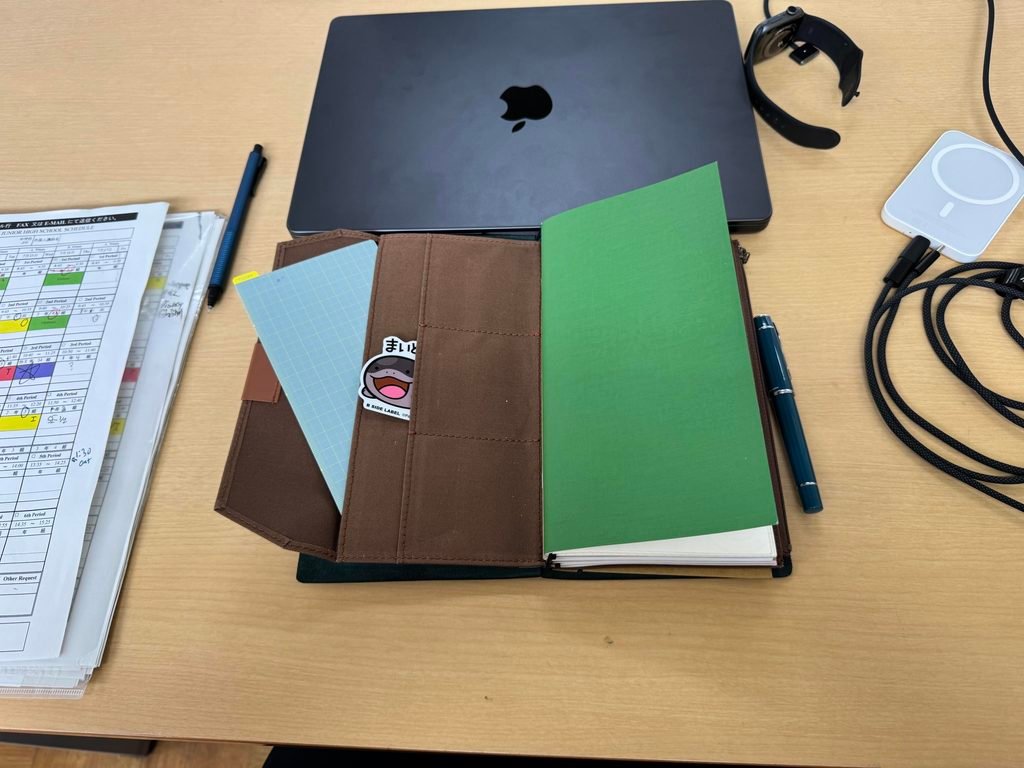
Using one notebook for two jobs? Choose for the harder one. Paper that handles a fountain pen will handle a ballpoint, but paper made for ballpoints may not handle fountain pen ink.
What size notebook should you get?
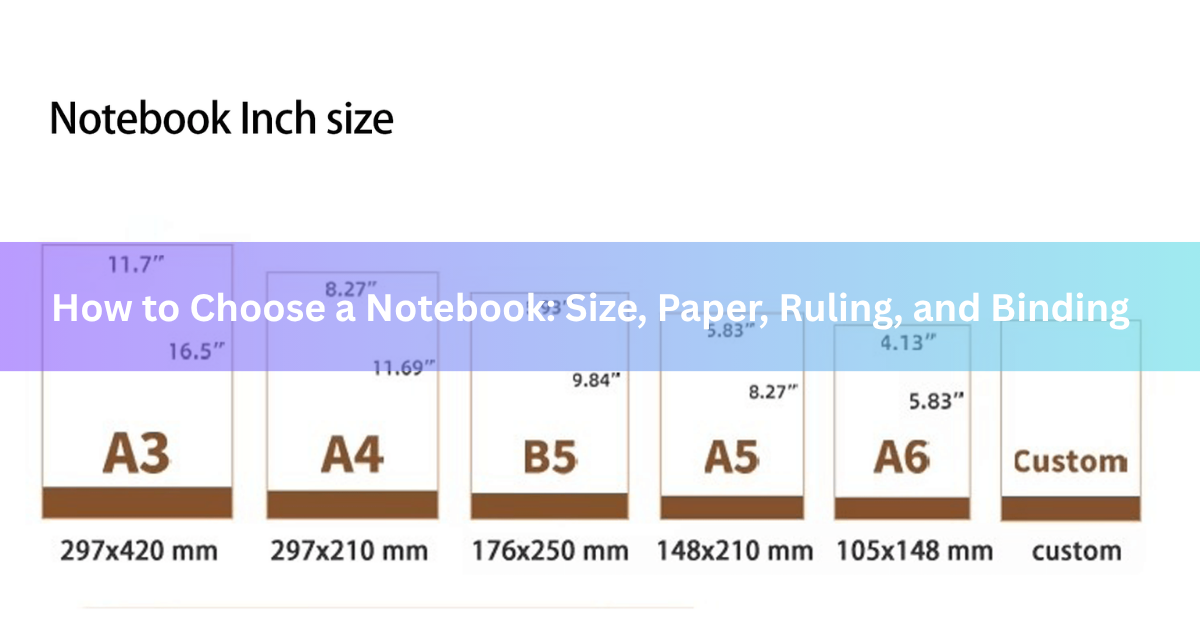
A5 is the best all-round size. At 148 × 210 mm, or about 5.8 × 8.3 inches, it gives you room for full pages of writing and still fits in most bags. Go smaller if the notebook has to live in a pocket, and go bigger if you mostly write at a desk or draw diagrams.
These letter-and-number sizes come from the ISO 216 standard, and each size is half the one before it. Fold an A4 sheet in half and you get A5. Fold that in half and you get A6.
| Size | Dimensions | Good for |
|---|---|---|
| 3.5 × 5.5 in (89 × 140 mm) | Lists and quick ideas | |
| A6 | 105 × 148 mm | Small bags and daily to-do lists |
| A5 | 148 × 210 mm | Journals, meetings, and planners |
| B5 | 176 × 250 mm (ISO) or 182 × 257 mm (Japan) | Class notes with room for diagrams |
| A4 | 210 × 297 mm | Desk work and big layouts |
| US Letter | 8.5 × 11 in (216 × 279 mm) | School and office work in North America |
B5 comes in two versions, so check the exact millimeters before buying a cover or refills. Brand size names can also drift from the standard. The Leuchtturm1917 Medium, for example, measures 145 × 210 mm, a few millimeters narrower than true A5.
Which page layout is best: lined, dot grid, graph, or blank?
Pick lined pages if you mostly write sentences, dot grid if you mix writing with lists and drawings, graph if you work with numbers, and blank if you sketch.
Lined pages
Lines make neat handwriting easy, but the spacing between them matters more than it looks. In the US, wide ruled lines sit 8.7 mm (11/32 inch) apart, college ruled lines sit 7.1 mm (9/32 inch) apart, and narrow ruled lines sit 6.35 mm (1/4 inch) apart. On a letter-size page, college ruled fits about 33 lines, while wide ruled fits about 27.
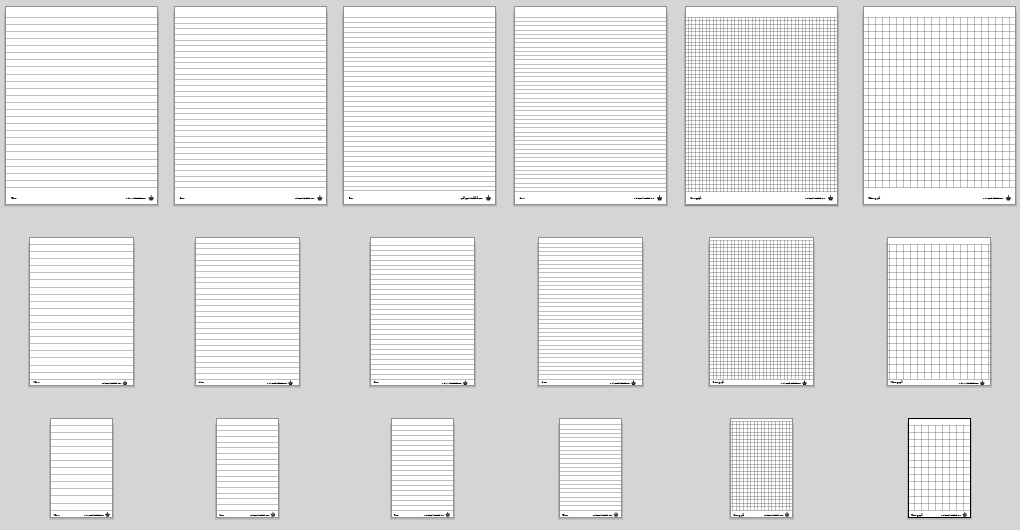
Elsewhere, spacing is usually given in millimeters. Many European notebooks use 8 mm lines, and Japanese notebooks use A ruled for 7 mm and B ruled for 6 mm. If your letters keep touching the line above, go wider.
Dot grid pages
Dot grid pages have tiny dots, usually 5 mm apart. The dots keep your writing straight, yet they fade into the background when you draw a chart, a calendar, or a quick sketch. That makes dot grid a strong fit for planners and bullet journals.
Graph pages
Graph pages, also called squared or grid pages, have full lines running both ways, often in 5 mm squares or four squares per inch. They suit math, science, and neat columns, though the grid can feel busy for everyday writing.
Blank pages
Blank pages give you total freedom for sketches and mind maps. To keep text straight, slip a lined sheet under the page. On thinner paper, the lines show through enough to follow.
How heavy should notebook paper be?
For ballpoints, pencils, and most gel pens, 70 to 80 gsm paper works well. For fountain pens, markers, or heavy highlighting, look for 90 to 120 gsm, or paper made for fountain pens.
Gsm stands for grams per square meter. It tells you how heavy the paper is, and heavier paper is usually thicker. For a sense of scale, standard US copy paper is about 75 gsm. Most Moleskine notebooks use 70 gsm paper, the standard Leuchtturm1917 A5 notebook uses 80 gsm, and papers made for fountain pens are often around 90 gsm.
Some US labels list pounds instead, and the pound number changes with the type of paper. Copy paper is sold as 20 lb, yet a notebook with lighter 70 gsm paper can be labeled 47 lb. To compare two notebooks fairly, compare the gsm.
A bigger number still doesn’t guarantee clean ink, because the way paper is treated matters too. Some paper gets a treatment called sizing, which keeps ink on the surface instead of letting it soak into the fibers. Tomoe River S paper is only 52 gsm, thin enough to see through, yet it takes fountain pen ink with almost no feathering or bleed-through. The trade-off is more show-through and slower drying.
Feathering is when ink spreads into the paper and lines look fuzzy. Bleed-through is when ink soaks through to the back of the page. Show-through, also called ghosting, is when you can see writing from the other side even though no ink passed through.
Paper color matters less. White paper shows ink colors accurately, while cream or ivory paper has less glare under bright light.
Will your pen work on the paper?
It depends on how much ink your pen puts down. Ballpoints and pencils work on almost any notebook paper. Gel pens and rollerballs are wetter, so thin, untreated paper can show through, and 80 gsm or more is a safer bet. Fountain pens need paper made to keep ink on the surface, and the smoothest of those papers take longer to dry.
Water-based markers and brush pens show through thin paper, so heavier paper, around 120 gsm, gives cleaner pages. Alcohol-based markers soak through almost any notebook paper, so keep a scrap sheet behind the page. For watercolor, use real watercolor paper, usually 300 gsm (140 lb), because thinner paper buckles when wet.
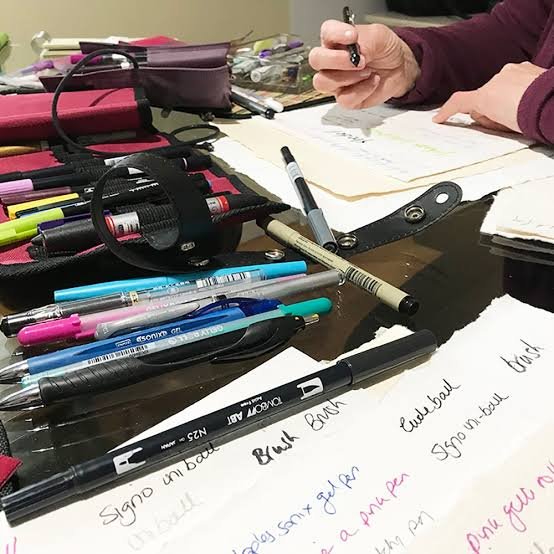
Left-handed writers have one more thing to check. Your hand often moves across fresh ink, so paper that dries slowly can smear. Pick paper and ink that dry quickly.
Test before you commit: Write a few lines with your usual pen on the last page. Wait 30 seconds, run a finger across the ink, then flip the page. Fuzzy lines mean feathering, dots on the back mean bleed-through, and a smudge means the paper dries too slowly for you.
Which notebook binding is best?
For most people, a sewn or spiral binding works best because both open flat on a desk. Here’s how the main types compare.
- Sewn (thread-bound): Pages are stitched together at the spine. These notebooks last for years and open flat, which makes them great for journals you want to keep, but pages don’t tear out cleanly.
- Spiral or wire: A coil runs through punched holes. The notebook lies flat, folds back on itself, and lets you tear out pages. A coil on the side can press into your hand, and a top-bound spiral avoids that for both left- and right-handed writers.
- Staple-bound: Folded pages are stapled through the center fold. It’s light, cheap, and opens flat, but it only works for thin notebooks, like many pocket sizes.
- Glued: Pages are glued into the spine, like a paperback book. It keeps prices low, but many glued notebooks won’t stay open flat, so writing near the spine gets awkward.
- Rings and discs: Loose pages clip into rings or discs, so you can add, remove, and reorder them. They’re bulkier, and hole patterns differ by brand and country, so make sure refills match your binder.
Should you get a hardcover or softcover?
Get a hardcover if you carry the notebook every day or often write without a desk. The stiff cover protects the pages in a bag and gives you a firm surface on your lap. A softcover is lighter and bends to fit a pocket. For school, plastic covers made of polypropylene hold up well to spills and packed backpacks.
Which extras are worth paying for?
A few extras earn their place over months of use. Numbered pages and a blank index at the front help you find old notes. A ribbon bookmark opens straight to today’s page, an elastic band keeps the notebook shut in a bag, and a back pocket holds receipts and loose notes. Perforated pages let you tear out a sheet cleanly.
If you plan to keep your notebooks for years, choose acid-free paper, which yellows and turns brittle far more slowly than ordinary paper. If the environment matters to you, look for recycled paper or the FSC label, which marks paper made from responsibly sourced wood.
How much should you spend on a notebook?
Spend based on the job. A basic notebook that costs a few dollars is fine for rough class notes you’ll replace each term. A premium A5 hardcover, which usually costs about $20 to $30, makes more sense for fountain pens, a year-long planner, or a journal you want to keep.
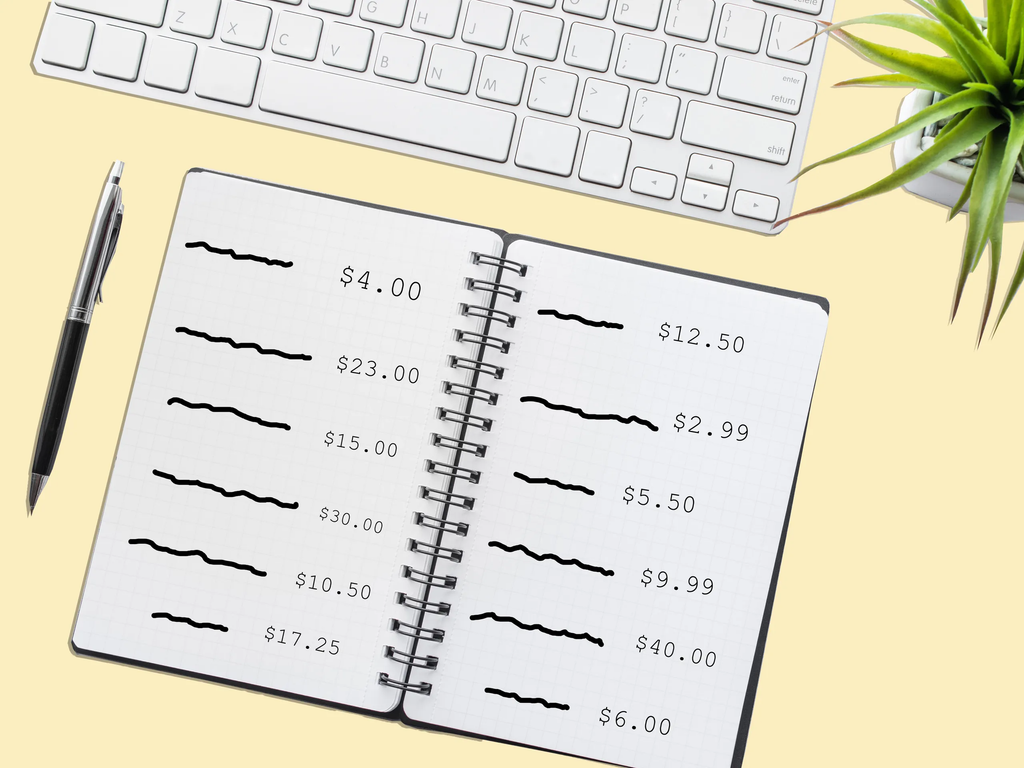
Before you compare prices, check whether the label counts sheets or pages. Each sheet has two sides, so a notebook with 80 sheets has 160 pages. Then work out the cost per page. A $25 notebook with 250 pages costs 10 cents a page, while a $9 notebook with 200 pages costs 4.5 cents a page. The cheaper one only wins if its paper suits your pen.
Frequently asked questions
What gsm is good for a notebook?
For everyday writing with ballpoints, pencils, or gel pens, 70 to 80 gsm is plenty. If you use fountain pens, markers, or lots of highlighter, choose 90 to 120 gsm or paper made for fountain pens, since it shows less ink on the back.
Is A5 or B5 better for taking notes?
B5 is better for class notes and diagrams because each page holds more. A5 is better if you carry your notebook everywhere, since it fits in most bags. If you need both, a B5 for lectures and an A5 for planning make a practical pair.
Should I get a dot grid or lined notebook?
Get lined pages if you mostly write sentences and want the neatest handwriting. Get dot grid if you also make lists, tables, calendars, or quick sketches, because the dots guide your writing without getting in the way of drawings.
What notebook paper works best with fountain pens?
Smooth, treated paper made for fountain pens works best, and it’s often around 90 gsm or heavier. Some thin papers, like 52 gsm Tomoe River S, also handle ink well but dry slowly. Test your pen before you commit, especially if you’re left-handed.
How do I choose a notebook for school?
Match it to the subject. Pick lined B5 or letter-size notebooks for writing-heavy classes and graph paper for math and science. College ruled suits most older students, wide ruled gives younger students room for bigger letters, and a spiral or plastic cover survives a backpack.
Conclusion
Knowing how to choose a notebook comes down to matching it to your main use and your pen. Start with the size, then pick the page layout, paper weight, and binding that suit the way you write. For most people, an A5 notebook with 80 to 100 gsm paper, lined or dot grid pages, and a sewn or spiral binding is a strong first choice. Test your pen on the last page, and if the ink stays crisp without smearing, you’ve found your match.
Recommended Article:
How to Find Out How Old Your Laptop Is (Windows and Mac)
How to Upgrade the CPU in a Laptop (and When You Actually Can)
Are Laptop Batteries Lithium-Ion?
Average Laptop Lifespan by Brand: What Each One Really Gives You
What Is eMMC in a Laptop? A Plain-English Guide to Budget Storage