The largest laptop screen you can buy today measures 18 inches, taken corner to corner. A handful of brands sell laptops this size, mostly big gaming and creator machines. The biggest laptop screen ever built was even larger, a one-off 21-inch model, but it is no longer made. Below is how the common sizes compare and how to pick the right one.
What is the largest screen on a laptop?
The largest screen on a laptop you can buy new is 18 inches. That measurement is the diagonal, from one corner of the display to the opposite corner, not the width. Several 18-inch laptops are on sale from brands like Lenovo, MSI, ASUS, Razer, Dell, and others, and most of them are heavy, powerful machines aimed at gamers and video editors.
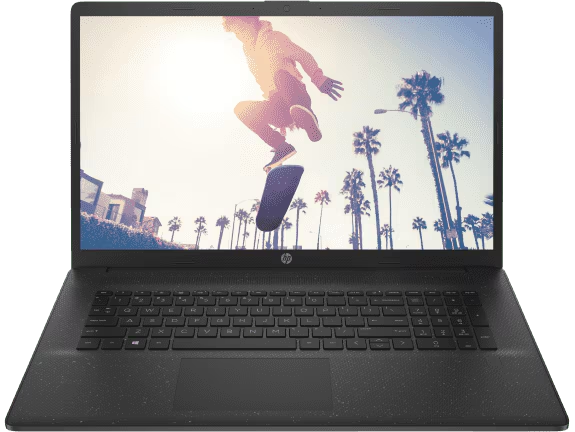
For a long time 17.3 inches was the ceiling for most shoppers. The market has since pushed to 18 inches, and that is now the practical top end for a normal clamshell laptop, the kind with a lid that folds down over the keyboard.
Quick answer: 18 inches is the biggest laptop screen sold today. 17.3 and 16 inches are the next steps down and far more common.
What is the biggest laptop screen ever made?
The biggest laptop screen ever put into a real product was 21 inches, on the Acer Predator 21 X, a gaming laptop released in 2017. It used a curved 21-inch display and was the first laptop with a curved screen.
This machine was extreme in every way. It weighed around 8.5 kilograms (about 19 pounds), packed two graphics cards, used five cooling fans, and cost roughly $9,000. Acer built only a small, limited run, so it was more of a statement piece than a laptop most people could own or carry. It has long since stopped selling, which is why it does not count as something you can buy today.
You can still read the original details on Acer’s announcement page for the Predator 21 X, which lists its curved 21-inch display and other specs.
Common big laptop screen sizes today
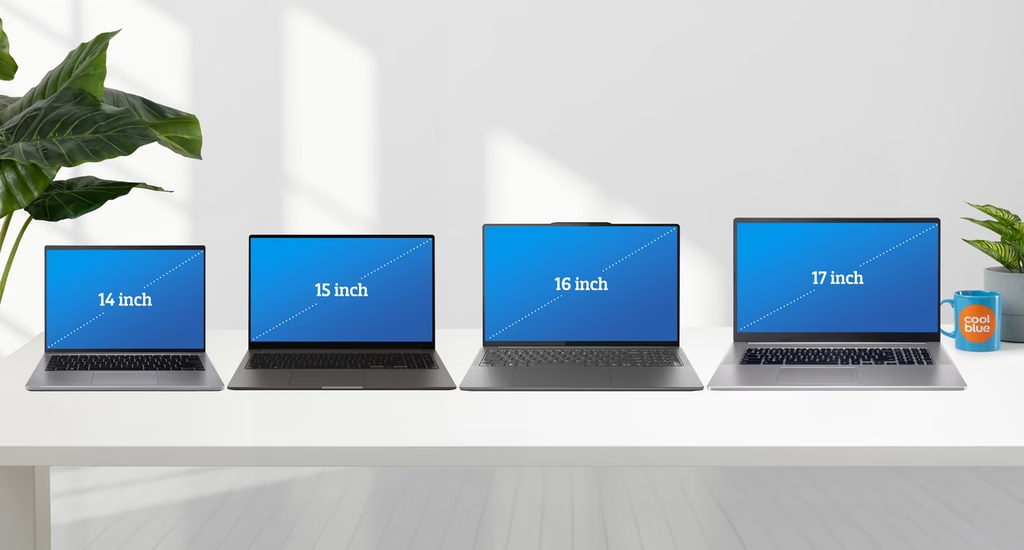
Most big-screen laptops fall into one of three sizes. Here is how they stack up, from largest to smallest, along with the retired 21-inch record holder for context.
| Screen size | How common | Best for |
|---|---|---|
| 18 inches | Widely sold | Gaming, video editing, and desktop replacement work where screen space matters more than weight |
| 17.3 inches | Very common | A big view with better portability than 18 inch, good for spreadsheets, media, and general work |
| 16 inches | Most common big size | The sweet spot for many buyers: extra room without the bulk of a 17 or 18 inch |
| 21 inches | One-off, no longer sold | A retired novelty that showed the practical ceiling for a folding-lid laptop |
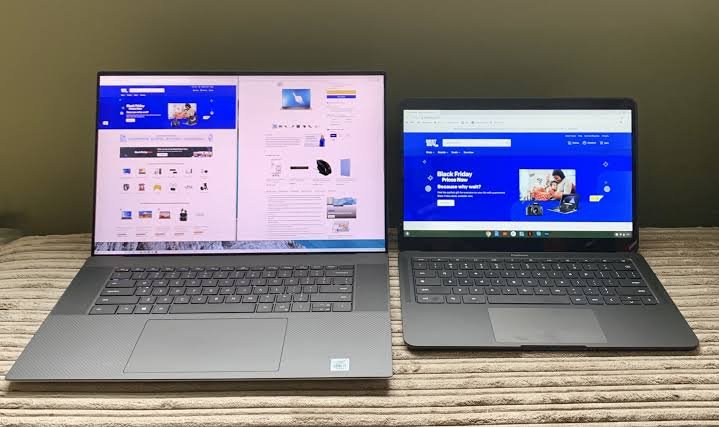
The jump from 16 to 18 inches sounds small on paper, but the extra diagonal makes a real difference for spreadsheets, timelines in video software, and side-by-side windows. It also adds weight and makes the laptop harder to fit in a bag.
Why laptops don’t get much bigger than 18 inches
Size has a practical ceiling, and the Predator 21 X showed exactly where it sits. Once a laptop screen passes 18 inches, the whole machine becomes hard to live with. There are a few clear reasons.
- Weight and bulk. A bigger screen needs a bigger body, a bigger battery, and stronger cooling. Past 18 inches the laptop gets heavy enough that it stops being portable.
- The hinge and lid. A clamshell laptop has to fold flat. A very large lid puts stress on the hinge and makes the closed laptop wide and awkward.
- Battery drain. Large, bright screens use more power, so a giant display cuts into an already short battery life on high-powered machines.
- You can just plug in a monitor. If you want more space at a desk, an external monitor gives you 27 inches or more for less money, which removes most of the reason to build a bigger laptop.
That last point is the big one. For anyone who wants a huge working area, a normal laptop plus an external display is cheaper, lighter, and easier than chasing the largest built-in screen.
How to pick the right big-screen laptop for you
The largest screen is not always the best screen for you. Work backward from how you will use it. These steps help you land on the right size.
- Decide how often you will carry it. If the laptop mostly sits on a desk, 18 inches is fine. If you commute or travel with it, 16 inches is easier to live with.
- Match the size to the task. Gaming and video editing benefit from 17 to 18 inches. General work, browsing, and study are comfortable at 16 inches.
- Check the weight, not just the size. Two 18-inch laptops can differ by a kilogram or more. Look up the exact weight before you buy.
- Look at battery life. Bigger screens drain faster, so read real-world battery figures, not just the headline number.
- Confirm it fits your bag. An 18-inch laptop is wide. Measure your backpack or case first.
Tip: If you mainly want more screen space at a desk, buy a 16-inch laptop and a separate monitor. It usually costs less and works better than one giant laptop.
Screen size vs resolution: what actually matters
Screen size and resolution are two different things, and it helps to know the difference before you spend. Size is the physical diagonal in inches. Resolution is how many pixels the screen shows, which controls how sharp everything looks.
A large screen with a low resolution can look soft or blocky, while a smaller screen with a high resolution looks crisp. Many big laptops now use 4K or high-refresh panels, so check both numbers. If you want to understand the pixel figures, Intel’s guide to display resolution explains what terms like 1080p and 4K actually mean.
For a big screen, aim for at least a 2560 x 1600 resolution so text and images stay sharp across all that space. A larger display with too few pixels can feel like a step backward, even though it is technically bigger.
Frequently asked questions
Is there a 20-inch laptop?
No standard 20-inch laptop is sold today. The largest current size is 18 inches. The only laptop that went bigger was the 21-inch Acer Predator 21 X, which is no longer made.
Are 18-inch laptops worth it?
They are worth it if you game, edit video, or want a desktop replacement and rarely carry the laptop around. If you travel often, a 16-inch laptop is lighter and easier to handle.
What is the most common big laptop screen size?
16 inches is the most common big size. It gives extra room over a 15.6-inch screen without the bulk of a 17 or 18-inch machine, so many buyers land there.
How is laptop screen size measured?
Screen size is the diagonal distance from one corner of the display to the opposite corner, measured in inches. It does not include the bezel or the laptop body.
Do bigger laptop screens use more battery?
Yes. Larger, brighter screens draw more power, so an 18-inch laptop usually lasts less time on a charge than a smaller one with the same battery.
Conclusion
The largest laptop screen you can buy today is 18 inches, sold mainly on powerful gaming and creator machines. The biggest ever built was the retired 21-inch Acer Predator 21 X. For most people, 16 or 17.3 inches gives plenty of space without the weight, and pairing a smaller laptop with an external monitor beats chasing the biggest built-in screen. Pick the size that matches how you carry and use it.
Recommended Articles:
Can Your Employer Listen to You Through Your Laptop Microphone?
Which Statement Is True About Laptops? The Answer, Explained
How to Use a Laptop Cooling Pad the Right Way
Acer Laptop Monitor Not Working? Here’s How to Fix It
What Laptop Screen Pressure Damage Is and How to Deal With It